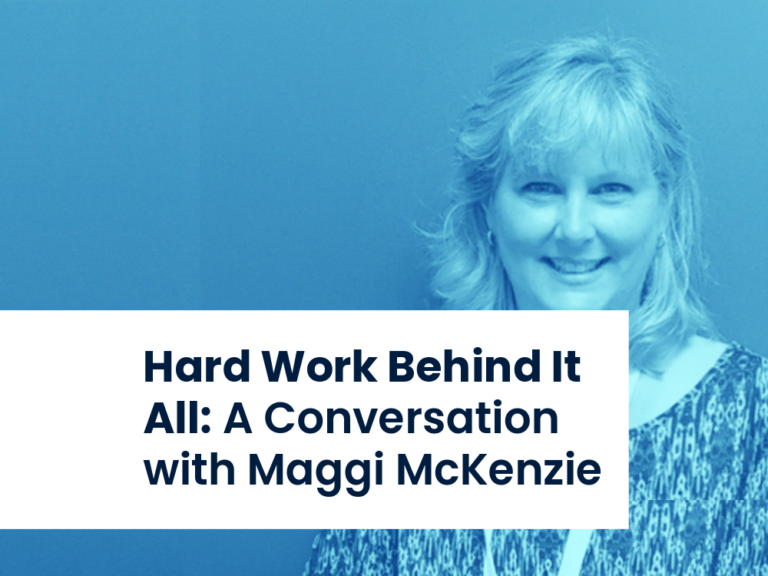
The Unglamorous Work That Powers It All: A Conversation with Maggi McKenzie, Business Systems Analyst Manager
How 25 years of data rigor in healthcare prepared her to build the foundation that makes Pareo® work for health plan payment integrity programs
Maggi McKenzie has spent a quarter-century watching business systems transform from paper to pixels, from spreadsheets to massive datasets. In that time, she’s seen tools change, systems evolve, and processes get exponentially more complex. But the work — the actual work of getting data right — has remained stubbornly constant.
As a senior-level business systems analyst and leader at ClarisHealth for the past six years, Maggi oversees data integration for Pareo® implementations. It’s the job that happens before anyone logs into a dashboard. It’s the foundation. The reason that when a health plan connects a new vendor or expands their PI program, things work smoothly instead of breaking down.
She doesn’t expect anyone to find her job exciting. But it’s exactly the role’s under-the-radar, in-the-weeds nature that she finds so interesting.
In this conversation with Director of Community Amanda Bair, Maggi reflects on:
- A career spent digging into the details
- Why early integration work matters more than people realize
- Why the best data strategy is the one you think through before you actually need

Maggi McKenzie
Business Systems Analyst Manager
The Fundamentals Never Change, Even When Everything Else Does: Q&A with Maggi McKenzie
Amanda Bair: You’ve been doing this work for 25 years: before Pareo, before anyone was really talking about data integration as a strategic capability. What has actually changed about your work, and what remains stubbornly the same?
Maggi McKenzie: When I started, the tools were green bar reports. The department was called Data Processing. That’s just how it was.
What’s available now — the things on my desktop, the scale of data we can work with — those didn’t exist then. We can do things now that would have been impossible. But the core need? That hasn’t changed at all.
You still have to pay attention to quality. You still have to begin with the end in mind, which is providing value to stakeholders. You still need analysts who think carefully about what they’re doing. Those things are as true now as they were 25 years ago.
Our data integration teams focus on that above everything else. We’re always working on better tools, faster processes, more efficient implementations. But the foundation is always the same: get the data right, and everything that follows works better.
AB: I’ve been on some of your client calls, and the way you approach these situations is impressive. When you’re sitting down with a new client for the first time, what do they typically underestimate about getting their data into Pareo?
MM: Our goal is to minimize surprises. Clear guidelines, clear communication — that’s how we move forward together.
We work with dedicated, talented data teams on the health plan side. But iteration cycles can take longer than business teams expect. When you’re setting up a new data feed, there’s usually at least one cycle of analysis and corrections you have to go through with the client’s data team. That takes time.
We try to set expectations upfront. We explain how long this typically takes, what to expect in those iteration cycles. That communication is how we keep everyone aligned and avoid the kind of surprises that derail implementations.
The Configuration vs. Standardization Balance
AB: I imagine you’re constantly balancing customization requests against standardization ideals. You let clients configure Pareo to their specific needs, especially those with a long history of doing things a certain way. But you’re also pushing toward common standards that help Pareo work better at scale. How do you decide where to draw that line?
MM: On the claims data extract side — claims, members, providers — we’ve built flexibility into our ingestion process using good data integration practices. We can let clients provide data points that are unique and important to their PI programs while still delivering a standard solution that’s scalable across many health plans.
Clients sometimes ask: “Can’t you just do two or three transformations on our end, and then the data would be usable as-is?”
We’ve built these ingestion procedures to meet needs for lots of clients, and they’re standard for a reason. They help us be quick and efficient with new implementations. When we talk through these things with clients — when we explain the why — generally good conversation gets us where we need to be.
We adhere to our standards to ensure consistency and that we can support all clients the same way. That consistency is what makes everything downstream work better.
AB: And that foundation you’re building right now, with your team, is what enables clients to get value on the platform going forward. It all starts with this work.
MM: Exactly. Their experience over time — when they’re looking to derive insights, when they want to expand — that foundation starts right here. When we get it right from the start, it makes everything else possible.
Implementation Isn’t One and Done
AB: A lot of folks assume data integration is one project: map the data, turn it on, done. What’s the reality of maintaining and evolving integrations over time?
MM: Payment integrity is evolving. New approaches and new services come online constantly. Over time, we work with health plans to integrate new or expanded lines of business into Pareo. We also onboard new datasets from new source systems. Things clients might acquire or want to bring online later, things they didn’t have the ability to do in the original implementation.
We help them bring on new vendors. Sometimes that includes changes to the data feed, depending on whether it’s combined with a new line of business or a new PI program.
What’s satisfying is working again with teams from past implementations to help them get new value out of their data. That’s a typical expansion. It keeps the relationship moving forward.
The Strategic Question Nobody Asks Until Later
AB: What’s one thing you wish every payment integrity leader understood about data quality before they even start evaluating a platform like Pareo?
MM: Think comprehensively from the start. Get as much of your health plan’s data into the implementation as makes sense. That removes friction on your side down the road.
When you flip a switch for a new capability or a new vendor down the road, you want that to be easy. You want it to be a small lift for us and a small lift for you. That’s how you get to value from new approaches faster.
It’s like leaving empty space on your electrical board when you upgrade. You’re building room for what comes next.
AB: What else should people know about what you do?
MM: A lot of what we do is down in the weeds. But that’s where we like to work. That’s where the actual value gets built.
People will say they’re glad people like me exist, because they’d never want my job. But I’m happy digging around in client data to make sure it meets our standards and that we can help them get the best possible value.
It may not be glamorous. But it’s absolutely necessary.
Conclusion
In the current landscape of healthcare technology, where speed and scale dominate the conversation, Maggi McKenzie represents the “slow down to speed up” axiom. She works at the pace that quality requires, which ends up being faster than cutting corners would permit.
Her 25-year career has taught her that the fundamentals outlast the trends. Tools change. Systems evolve. Industries transform. But the work of understanding data, respecting its complexity, and building foundations that actually hold, remains constant.
When a health plan implements Pareo and finds that later they can quickly connect a new vendor, that smooth expansion is Maggi’s work. When a client looks at their PI data and sees not fragmentation but clarity, that’s her foundation enabling what they see on the screen.
The work that matters most is the work that enables everything else. And someone has to care enough to get it right.
Now’s the time for total payment integrity
See the ClarisHealth 360-degree solution for total payment integrity in action.
News + Resources
Category